



The Cayman Islands Government has approved a three-month extension of the 2026 Fuel Relief Programme, continuing support for households and businesses from 1 October through 31 December 2026.
As uncertainty and volatility persist in global energy markets, the extension maintains the 100 per cent import duty waiver on gasoline, diesel and propane and continues the residential electricity fuel charge assistance introduced for the summer.
Cabinet has approved a further CI$3.0 million in supplementary funding for the Electricity Assistance Programme which caps electricity fuel charges at $0.18 per kilowatt hour for nearly 95% of households across all three islands.
At current fuel cost rates of 0.2255 for September 2026, the cap and waiver combined provide savings of around $70.44 per month on usage of 1200 kWh (kilowatt hours).
Electricity costs in the Cayman Islands like many countries are influenced by international oil prices, shipping costs and other external market conditions. These pressures can affect household budgets and business operating costs, underscoring the importance of acquiring more affordable, alternative fuels and energy sources that are less susceptible to geopolitical issues.
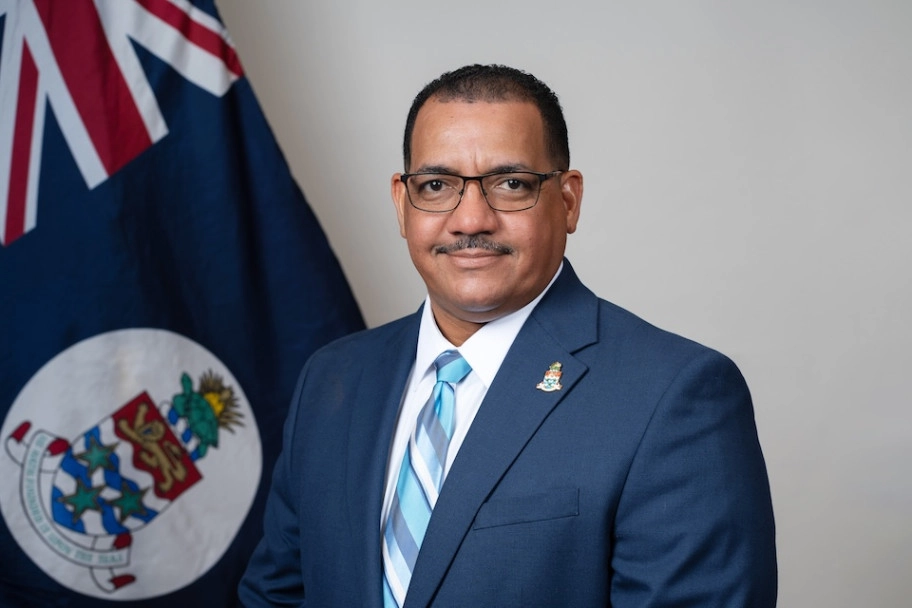
Premier Hon. André M. Ebanks MP said the extension would maintain practical cost-of-living support while Government continues its longer-term energy programme.
“Cost of living remains a daily concern and struggle for many families, and this extension provides some relief until the end of the year,” Premier Ebanks said. “Although Government is unable to control global fuel prices, we can act responsibly to reduce their impact on electricity, transportation and household budgets. We are also continuing the longer-term work on energy efficiency and renewable generation so that Cayman is less exposed to future price shocks.”
Minister for Finance and Economic Development, Hon. Rolston Anglin, MP, JP, said the scale of support already provided reflects both the reach of the programme and the continued need to protect residents from pressures originating outside the Cayman Islands.
“By the end of August, Government had provided approximately CI$11.35 million in electricity rebates and fuel duty relief. That is a significant level of support, but it reflects the scale of the exposure facing a small island economy that imports the fuel used to generate electricity and move people and goods,” Minister Anglin said. “Global energy markets remain uncertain, and the underlying pressures have not ended simply because the summer period is drawing to a close. Extending the programme through December gives families greater protection and avoids a sudden return of duties at a time when energy costs remain a concern.”
Expanded Electricity Assistance
The residential electricity fuel charge cap remains at CI$0.18 per kilowatt-hour. Residential customers using between 101 and 3,500 kilowatt-hours per month are eligible for relief on the first 2,000 kilowatt-hours of consumption.
Eligible relief is applied automatically through Caribbean Utlities Company (CUC) and Island Energy. Customers do not need to submit an application. The expanded threshold was introduced to include more multi-generational households, larger families and residents who rely on medical equipment at home.
CUC President and CEO, Mr. Richard Hew said, “CUC is pleased to work closely with the Cayman Islands Government to facilitate the programme which provides much-needed cost relief for residential customers, particularly at a time when fluctuations in global fuel prices are affecting electricity costs across Grand Cayman. We recognise the impact that higher energy costs can have on households and are thankful and welcome the measures being put in place that provide meaningful support to our customers. We also encourage customers to take practical steps to manage their energy consumption wherever possible. Simple energy-saving measures, along with investing in more energy-efficient appliances and technologies, can help households better manage their electricity usage and costs.”
Island Energy Director Matthew Bishop said, “Island Energy welcomes the Government’s decision to extend this important initiative. Without the fuel subsidy, the recent surge in global oil prices would have translated directly into significantly higher electricity costs, placing additional pressure on vulnerable people and hard-working families across the Cayman Islands.”
What the Duty Waiver Means at the Fuel Pump
The duty waiver removes 75 cents per imperial gallon from the import duty on gasoline, 85 cents per imperial gallon from diesel sold at service stations and 25 cents per imperial gallon from diesel imported for electricity generation. The waiver also continues to apply to propane.
The waiver removes the Government duty component, but it does not set or freeze retail fuel prices. Prices at service stations will continue to reflect international purchase prices, shipping and supply costs, existing inventory and other market factors. Depending on movements in global fuel prices, consumers may see a reduction, little change or an increase at the pump. In each case, prices should be lower than they otherwise would have been if the applicable import duty had been charged.
The Utility Regulation and Competition Office (URCO) and Customs and Border Control will continue coordinating with the Ministry of Finance and Economic Development and monitoring the fuel supply chain so that the benefit of the waiver is reflected in wholesale and retail pricing.
A Temporary Measure Within a Longer-Term Plan
The extension continues the first phase of Government’s three-phase energy relief and resilience plan. The second phase will expand home energy efficiency support through the Cayman Home Energy Efficiency Retrofit (CHEER) programme, including roof insulation and, at a later stage, more efficient air-conditioning units and fans.
The third phase focuses on expanding solar generation and other renewable energy solutions to reduce Cayman’s long-term exposure to oil price shocks.
Between 1 June and 31 August 2026, Government support provided through the programme totalled approximately CI$11.35 million. This comprised CI$3.92 million in rebates paid to Caribbean Utilities Company, Ltd. and Island Energy Ltd. for residential electricity relief, together with CI$7.43 million in foregone import duties on gasoline, diesel and propane.
The further CI$3.0 million in supplementary funding will increase the 2026 appropriation for the Electricity Assistance Programme. In accordance with the Public Management and Finance Act, the Minister will report the exceptional-circumstance transaction to Parliament, and the appropriation change will be included in a Supplementary Appropriation Bill for Parliament’s approval.
Minister Anglin said the extension balances immediate affordability support with responsible financial management.
“This is targeted, time-limited relief while Government advances the longer-term work needed to reduce energy consumption and dependence on imported fuel,” he said. “We are directing support where it has a practical effect on household and business costs, while maintaining compliance with the Principles of Responsible Financial Management.”