



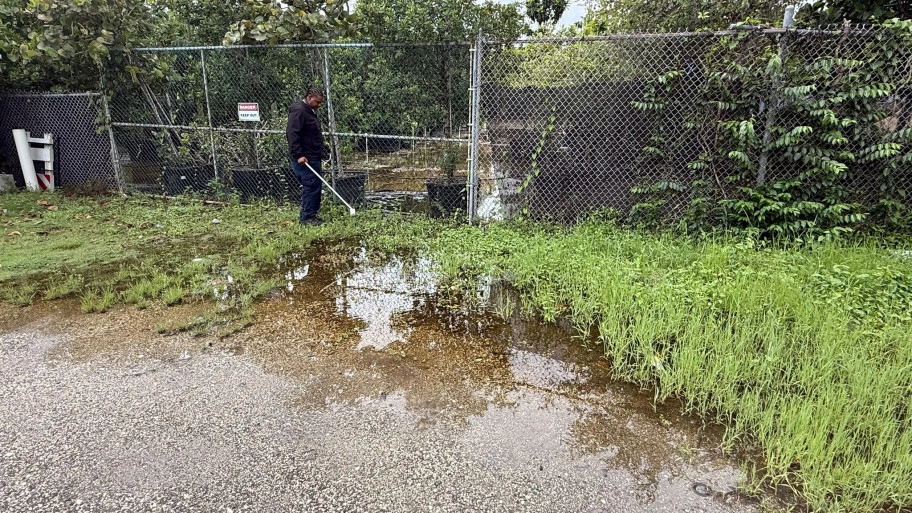
The Mosquito Research and Control Unit (MRCU) is advising residents across all three Cayman Islands to expect an increase in mosquito activity over the coming days, following higher than normal tides in wetland areas combined with increased rainfall.
While increased mosquito numbers are expected to be felt across Grand Cayman, Cayman Brac and Little Cayman, the Eastern Districts of Grand Cayman are expected to experience some of the highest levels.
The combination of rainfall and higher tides has created extensive breeding habitats, particularly within wetland and other low-lying areas. MRCU anticipated the potential for increased mosquito activity and began proactive aerial larvicide treatments earlier this month to reduce the number of mosquitoes reaching adulthood.
Larvicide operations were completed across a number of areas, beginning in West Bay and progressing through Grand Cayman towards Bodden Town. However, inclement weather last week forced aerial larviciding operations to be suspended before all planned areas could be treated.
Once weather conditions improved, MRCU was able to resume some larvicide treatments. However, the full planned treatment of Bodden Town and North Side was not completed, and planned treatments in the Sister Islands also remain outstanding.
While the larvicide treatments that were completed are expected to reduce the number of mosquitoes emerging from treated areas, the scale of the breeding habitat, combined with areas that could not be treated before weather interrupted operations, means a significant increase in adult mosquito numbers is still expected.
Large mosquito emergences following periods of heavy rainfall, tidal flooding and wetland inundation are not unusual in the Cayman Islands, particularly at this time of year. However, the timing of this emergence has created an additional challenge for MRCU’s control efforts.
Once mosquitoes have emerged as adults, the quickest way to reduce widespread populations is through aerial adulticiding. Aircraft allow MRCU to treat large areas within a relatively short period and are particularly important during large-scale emergences such as the one currently anticipated.
MRCU currently has one aircraft available for operations. That aircraft has reached the point at which its required 100-hour inspection is due, but it has been granted an additional 10 flight hours before it must be taken out of service for the inspection.
MRCU intends to make use of those additional hours to support mosquito control operations where conditions allow and where surveillance indicates treatment is most needed.
Once those additional 10 hours have been used, the aircraft will be taken out of service for its required 100-hour inspection, which typically takes approximately two weeks to complete.
MRCU’s second aircraft is currently grounded following a mechanical issue. At this time, the duration of that grounding is unknown, and the aircraft will remain out of service until the issue has been resolved and it is cleared to return to operations.
This means that once the additional hours on the currently available aircraft have been used, MRCU will be unable to conduct further aerial operations until either the 100-hour inspection is completed or the mechanical issue affecting the second aircraft is resolved.
This limitation is expected to affect MRCU’s ability to rapidly reduce adult mosquito populations across large areas during the anticipated emergence.
MRCU’s aircraft are approximately 20 years old and have provided extensive mosquito control support across the Cayman Islands during that time. Government has approved their replacement, and the procurement process for new aircraft is currently underway.
In the meantime, MRCU will use truck fogging and other ground-based control measures in affected communities. Truck fogging can provide relief and will be deployed based on surveillance data and mosquito activity. However, its reach is more limited than aerial treatment and trucks cannot cover the same large geographical areas as quickly as aircraft.
The mosquitoes expected to contribute significantly to this emergence include Aedes taeniorhynchus, commonly known as the black salt marsh mosquito, as well as mosquitoes from the Psorophora genus.
Aedes taeniorhynchus breeds extensively in coastal wetlands and salt marsh areas that become flooded by tides and rainfall. Psorophora mosquitoes include some of the largest mosquito species found in the Cayman Islands and breed in temporary flooded habitats, including sunny grassy areas, cattle pastures and wetlands where water ponds following periods of heavy rainfall.
MRCU teams will continue working across all three islands to reduce mosquito numbers as quickly as possible using the control methods currently available. Surveillance will continue to identify the areas experiencing the highest mosquito activity and help direct both aerial and ground operations where they are most needed.
As aircraft become available and are cleared to return to service, MRCU will resume or expand aerial operations where required. Restoring full aerial adulticiding capability will significantly improve the Unit’s ability to respond quickly and across wider areas.
Residents can also assist by checking their yards and properties for standing water and removing or emptying containers that may hold water. While many of the mosquitoes associated with the current emergence are breeding in wetlands and other large flooded areas, removing standing water around homes helps prevent Aedes aegypti, the mosquito that commonly breeds around residential properties, from also becoming a significant issue.
MRCU encourages residents to walk around their property once or twice each week and empty anything that has collected water. This includes buckets, plant saucers, tyres, toys, containers and other items that can hold even small amounts of water.
MRCU will continue to provide updates as conditions change and encourages residents to follow its social media platforms and WhatsApp Channel for the latest information.
Residents can also check when an operation is scheduled for their area by visiting https://linktr.ee/CaymanMRCU or by sending a WhatsApp message to 936-8503.
MRCU appreciates the public’s patience and understanding as teams work to reduce mosquito numbers using all available resources and maintain as much operational coverage as possible.