



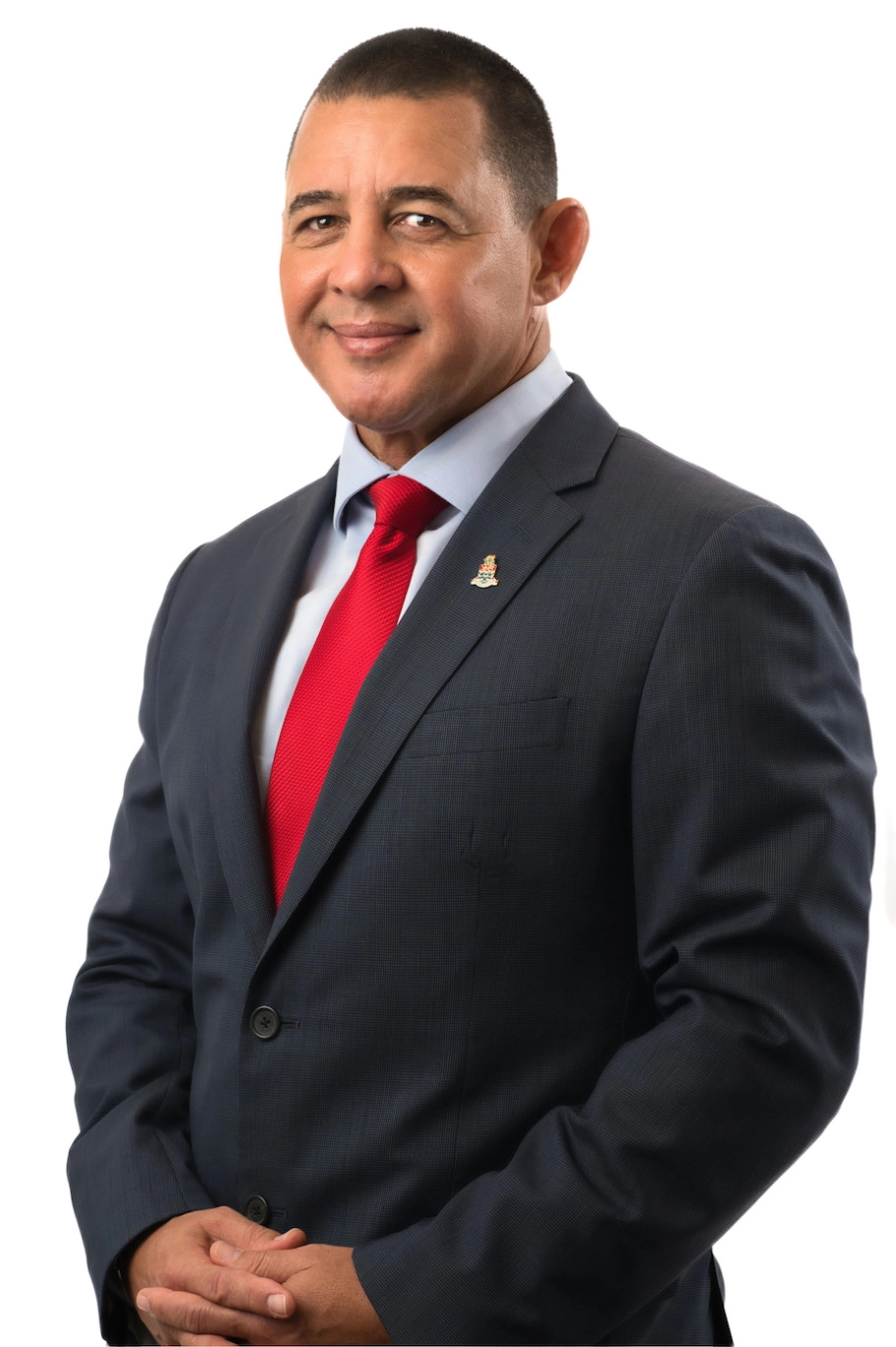
The Opposition says the Auditor General’s report on affordable housing should mark a turning point in holding Government accountable for housing delivery, after identifying serious weaknesses in performance, value for money and accountability.
Leader of the Opposition Hon. Joseph Hew acknowledged that the report covers successive administrations and said the former PPM Government must accept its share of responsibility for shortcomings before May 2021.
“We should not attempt to rewrite history. Housing delivery was not where it needed to be before 2021, and the Auditor General has identified weaknesses that existed during the PPM administration as well,” Mr Hew said. “The final period of our government also coincided with the extraordinary disruption of the COVID-19 pandemic, when the country’s priorities necessarily shifted towards protecting lives, preserving employment and keeping the economy functioning. That is relevant context, but it does not excuse every weakness identified by the Auditor General."
However, Mr Hew said accepting responsibility for the past cannot obscure responsibility for what has happened since May 2021.
“The present Minister has now held responsibility for housing for more than five years. At some point, an inherited problem becomes your responsibility to solve. Five years later, Government cannot continue behaving as though May 2021 was yesterday.”
The Auditor General found that Government spent $36.4 million on the Affordable Housing Initiative between 2019 and 2024, including more than $35.2 million in construction costs. By the end of 2024, only 36 new homes had been delivered, with another 50 under construction. “More than $35 million in construction expenditure, but only 36 homes delivered by the end of the audit period. We recognize that some of that expenditure relates to homes still under construction, so we should not distort the figures. But the Auditor General’s conclusion remains unmistakable: delivery has been far too slow for the scale of the housing crisis.
The report described programme performance as “inconsistent and largely inadequate relative to the scale of housing needs”, citing long waiting lists, slow project completion and insufficient delivery. The NHDT waiting list stood at 1,045 applicants at the end of 2024. By February 2026, it had grown to 1,194 applicants, with an average waiting time of 3.6 years and some Caymanians waiting almost ten years.
“That is the human consequence of these failures,” Mr Hew said. “These are not statistics sitting in a government report. These are Caymanians waiting to start families, parents trying to provide stability for their children and young people wondering whether owning a home in their own country is still a realistic ambition.”
Government Identified Who Was Responsible The Auditor General found that earlier Strategic Policy Statements did not adequately identify responsible agencies or measurable targets. However, the 2024–2026 Strategic Policy Statement specifically identified the Affordable Housing Initiative and named the NHDT and housing ministry as the responsible bodies. Despite this, as of March 2026, no new housing initiative had started in George Town or Bodden Town, which together account for more than two-thirds of the population.
“There was a time when Government could legitimately say that responsibility for housing was fragmented and unclear,” Mr Hew said. “But that excuse has expired. “Government’s own Strategic Policy Statement identified the program. Government identified the responsible bodies. Government committed to rolling the Affordable Housing Initiative out across the districts. “So, this is no longer a question of who was responsible. “The Government told us who was responsible. The question now is: where are the homes?”
Even Government’s ‘Affordable’ Housing Is Increasingly Unaffordable The report also found that the Government’s Affordable Housing Initiative may itself be unaffordable for some of the Caymanians it is intended to serve. The Auditor General calculated that a single applicant earning the programme’s maximum qualifying income of $4,500 per month could face total housing costs of approximately $2,200 per month — around 49 per cent of gross income, well above the recognised affordability threshold of 30 per cent.
“We have reached the point where we must ask what Government means when it uses the word ‘affordable’,” Mr Hew said. “If an affordable home can consume almost half the income of the Caymanian it was designed to assist, then building more houses alone will not solve the problem. We have to address the cost of housing itself, financing, land, infrastructure, construction costs and the broader cost of living.”
Plans Cannot Substitute for Delivery The Opposition welcomed the Public and Affordable Housing Policy and 10-Year Strategic Plan, approved in December 2025, but noted that the Auditor General found continuing weaknesses, including inadequate performance measures. Although the Auditor General recommended that Government develop an implementation plan and begin implementing the strategy “as soon as possible”, the Ministry indicated that the plan is not expected to be presented to the Minister for approval until the end of Q4 2027.
“Caymanians cannot live in a strategy document. They cannot raise their children in a committee meeting. And they cannot wait indefinitely for another implementation plan,” Mr Hew said. “The country needs measurable targets, deadlines, transparent reporting and, most importantly, completed homes.”
Mr. Hew said the Opposition will support serious reforms arising from the Auditor General’s recommendations while holding Government accountable for delivering them.
“This should not become another political argument about who first created the problem. Successive Governments have shortcomings to answer for, including ours. “But the present Government has now had more than five years with the housing portfolio. It has had the authority. It has had significant public resources. It has known about the demand. “The Auditor General has now provided the evidence. “The responsibility was identified. “The money was provided. “The demand was known. “Now Caymanians are entitled to ask: where are the homes?”