



Breast cancer awareness should not be confined to the month of October. It is a message that needs to be heard, understood and acted upon throughout the year.
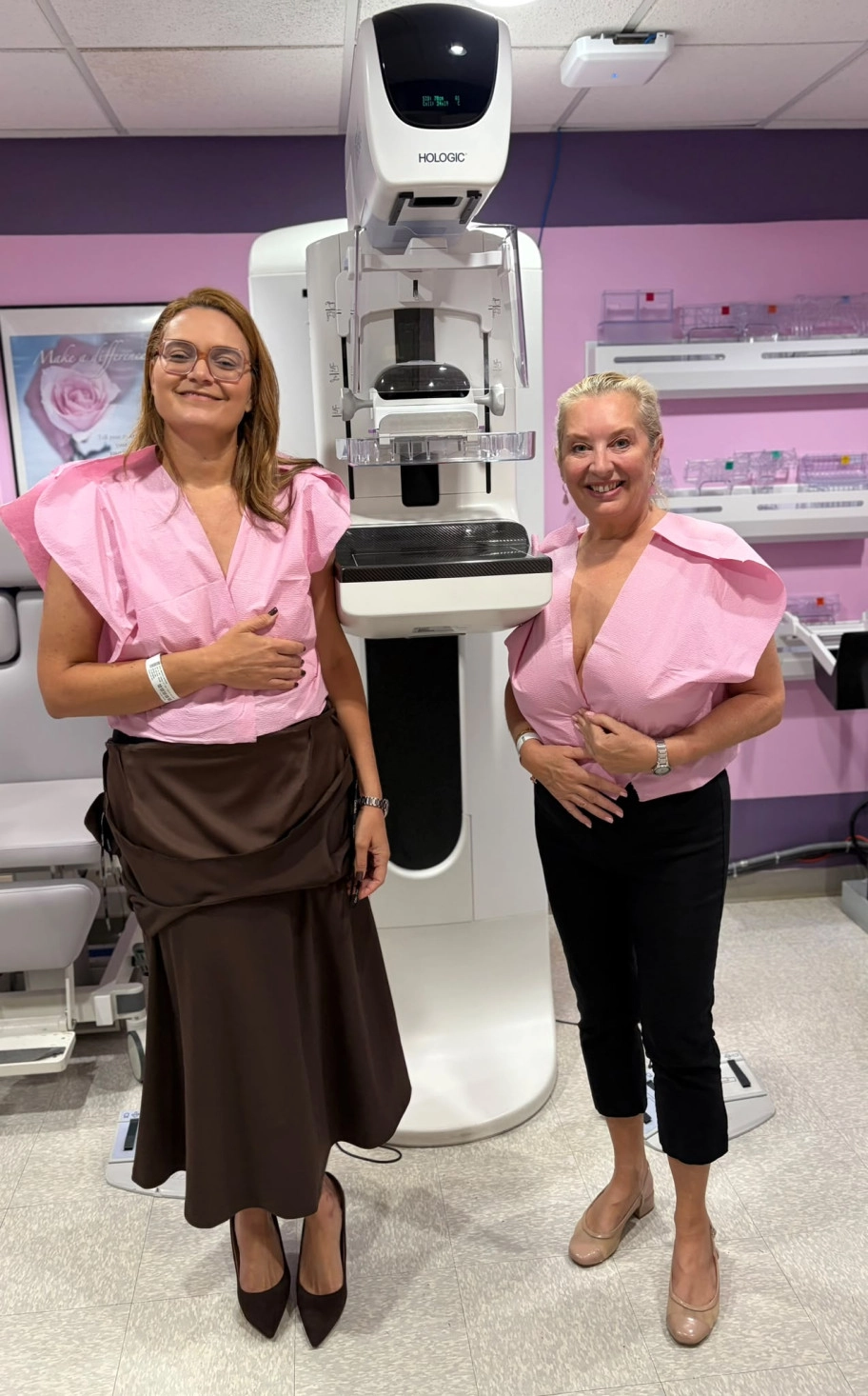
Demonstrating the importance of making breast health a personal priority, the Honourable Katherine Ebanks-Wilks, Minister of Health, together with her mother, her Personal Assistant, Dorisley Jackson, and Beverly Edgington, Chief Operating Officer of the Breast Cancer Foundation, attended the Health Services Authority (HSA) for their mammogram screenings.
The visit was about more than simply attending an appointment. It was an opportunity to lead by example; challenge some of the misconceptions surrounding mammograms and encourage women across the Cayman Islands to take responsibility for their breast health.
Of particular significance was the Minister's mother, who celebrated her 75th birthday today by attending her mammogram. Having not been screened for eight years, her decision to attend was a particularly important reminder that age should not automatically mean overlooking breast health. Women should discuss the appropriate screening and follow-up schedule with their healthcare provider, whatever their age.
One of the most common reasons women give for not attending screening is fear: fear that the procedure will be painful, fear of what the results might reveal, or the belief that, without a family history of breast cancer, they are not at risk.
Today's experience helped demonstrate why these concerns should never become a reason to delay screening.
All four women completed their mammograms, and the experience provided an opportunity to see first-hand just how straightforward the procedure can be.
During the appointments, mammographer Camile took the time to explain each stage of the examination, ensuring everyone understood what to expect and had the opportunity to ask questions.
As Camile explained, there will be some pressure during a mammogram, and it may feel uncomfortable for a brief moment. However, this generally lasts only a few seconds. Patients are encouraged to communicate with their technologist if they have any concerns or experience discomfort during the examination.
Understanding what happens during a mammogram can make an enormous difference to someone who may otherwise be anxious about attending.
The experience also provided an opportunity to dispel the myth that mammograms are unbearably painful. While everyone's experience is different, all four participants found the procedure manageable and were reassured by the care and explanation provided by the HSA team.
The Minister of Health, the Honourable Katherine Ebanks-Wilks, said:
"It is important that we practise what we encourage others to do. We speak frequently about the importance of preventative healthcare, but we must also make the time to look after our own health. I hope that by sharing our experience today, we can reassure other women that a mammogram is a straightforward procedure and encourage them not to put off making that appointment. Early detection matters, and taking a little time for ourselves could make a life-changing difference."
The Minister's Personal Assistant, Dorisley Jackson, said:
"I was pleasantly surprised by how straightforward the whole experience was. Sometimes we build things up in our minds and allow fear or uncertainty to stop us from doing something important. Having everything explained beforehand made a real difference. I would certainly encourage other women not to let the fear of a mammogram prevent them from attending."
Beverly Edgington, COO of the Breast Cancer Foundation, said:
"One of the most important messages we want to get across is that breast cancer awareness does not end when October does. Neither does our work. Every single day, our team is supporting women and men through diagnosis, treatment and beyond, while continuing to encourage people to be proactive about their breast health.
"I am particularly keen to dispel the misconception that having no family history means you are not at risk. Most breast cancers occur in women without a known family history. We cannot use the absence of family history as reassurance that breast cancer will not happen to us. Screening, knowing what is normal for your own body and seeking medical advice when something changes are all essential.
"Today was about demonstrating that screening need not be something to fear. We all have busy lives, but we cannot keep putting our health at the bottom of the list."
While October provides an important opportunity to raise awareness, the Breast Cancer Foundation wants the community to understand that its services are available throughout the year.
The Foundation provides support at every stage of the breast cancer journey, from early detection and financial assistance with screening to its comprehensive Wellness Programme for those who receive a diagnosis.
Through its mammogram voucher programme, the Foundation helps eligible individuals access screening, while its Early Detection Programme provides additional assistance to those who may face financial or other barriers to diagnostic investigations.
For those diagnosed with breast cancer, the Foundation's Wellness Team works alongside medical professionals to provide practical, emotional and financial support. This includes assistance with treatment-related costs, counselling, care packages, chemotherapy and surgery support, bra and prosthesis fitting, and ongoing wellbeing services.
Importantly, individuals do not need to wait until October to seek assistance, ask questions or access information.
No Family History? You Still Need to Be Aware.
A particularly important message from today's visit is that breast cancer does not discriminate according to family history.
Having a mother, sister or other close relative diagnosed with breast cancer can increase an individual's risk, but the absence of family history does not mean someone is protected.
Breast cancer can affect women with no known genetic predisposition, and it can also affect younger women. This is why it is important to understand your personal risk, follow recommended screening guidance and become familiar with how your breasts normally look and feel.
Anyone who notices a new lump, a change in breast shape or size, skin dimpling, nipple changes or unusual discharge should seek medical advice promptly, rather than waiting for their next screening appointment.
The Breast Cancer Foundation encourages women to speak with their healthcare provider about the screening schedule appropriate to their age and individual circumstances.
The message is simple: Don't wait for October. Don't wait for symptoms. And don't assume that because there is no family history, you are not at risk.
The Breast Cancer Foundation encourages everyone to make breast health part of their year-round healthcare routine.
For information about mammogram vouchers, screening assistance or the Foundation's Wellness Programme, contact the Breast Cancer Foundation on 923 1135, email info@bcfcayman.com or visit www.breastcancerfoundation.ky.