


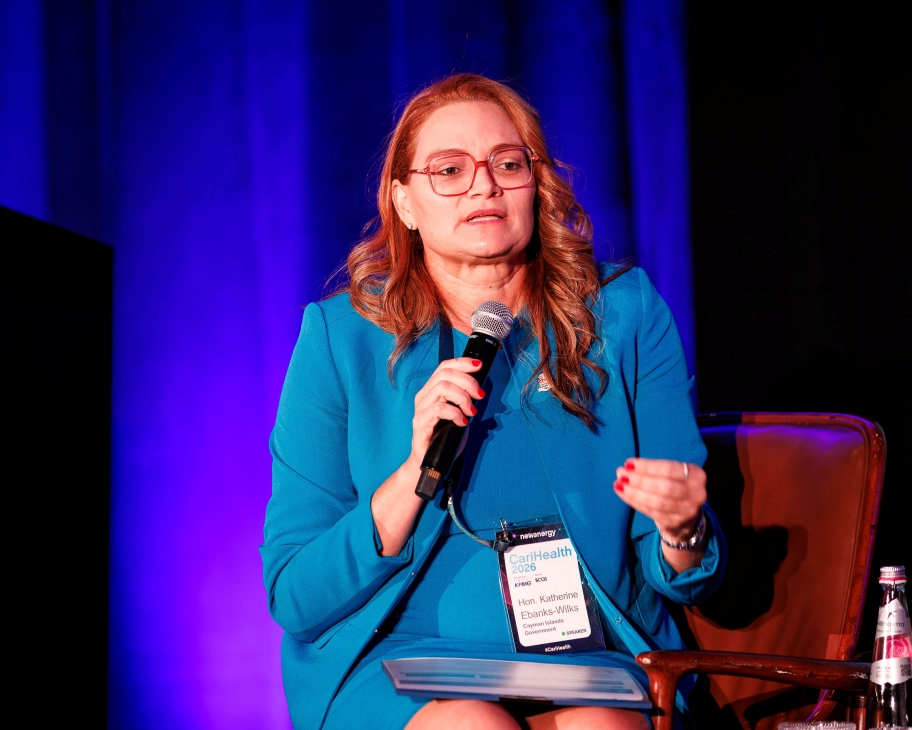
The Cayman Islands strengthened its presence in regional health and infrastructure discussions, with Minister for Health, Environment and Sustainability, Hon. Katherine Ebanks-Wilks MP, representing the country at two major Caribbean forums in Miami, and the 53rd Meeting of the Council for Human and Social Development, Health (COHSOD-Health) in Washington D.C.
On 25-26 September, Minister Ebanks-Wilks joined ministers of health of CARICOM member and associate member states for the 53rd Meeting of the Council for Human and Social Development, Health (COHSOD-Health) at the Pan American Health Organization (PAHO) Headquarters in Washington D.C.
Key focus areas that were debated in sessions at COHSOD included health security and emergency preparedness, noncommunicable diseases, climate change, HIV, cancer care, digital health, sustainable financing and Universal Health Coverage. The majority of the countries represented all face these challenges, there was robust discussion exploring how to address these important issues collaboratively throughout the region, and what lessons can be learned from each other.
“These regional priorities are critical to strengthening Cayman’s health system, improving preparedness, expanding access to care and identifying opportunities for regional collaboration”, said Hon. Katherine Ebanks-Wilks, Minister for Health, Environment and Sustainability on her return from Washington D.C. She added: “The meeting of health ministers reinforced the value of CARICOM cooperation in developing practical solutions to common health challenges, including digital health standards, strategic purchasing and stronger specialist services.”
The Chief Medical Officer, Dr Hilary Wolf also travelled to Washington to represent Cayman’s interests at the 63rd PAHO Directing Council, where CARICOM Ministers of Health endorsed the Caribbean Action Plan on Health and Climate Change (2026-2031). The plan establishes a new regional framework developed with the support of PAHO and the World Health Organization (WHO) to help countries strengthen resilient and sustainable health systems and protect communities from the growing health impacts of climate change.
Dr Wolf said: “For Cayman, being part of these regional and international health discussions is important because the challenges we are preparing for do not stop at national borders. Climate change is already influencing the need to anticipate health system risks , from extreme weather and disruption to essential services to changing patterns of disease. Cayman’s participation allows us to contribute our own experience and priorities, while drawing on the evidence, technical expertise and lessons of partners across the Caribbean and the wider Americas. That exchange is invaluable as we continue strengthening a health system that is resilient, prepared and responsive to the needs of our population.”
Bringing Cayman’s perspective to CariHealth 2026
Earlier in the month, similar themes were discussed at the 10th Caribbean Infrastructure Forum (CARIF) on 15-16 September, and the inaugural KPMG Caribbean Healthcare Summit, CariHealth 2026, held on 17 September.
CariHealth 2026 brought together healthcare leaders from 15 countries and territories to examine the shared pressures facing island health systems. Under the theme, ‘Addressing the Pressure to Modernize’, discussions covered chronic disease and mental health, digital transformation, prevention and wellness, climate resilience, workforce pressures and financial sustainability.
Participating in the summit’s ‘Building Climate-Resilient Health Systems’ panel alongside representatives from UNOPS and Direct Relief, Minister Ebanks-Wilks outlined the Cayman Islands’ strategic approach to bringing health, environment and sustainability closer together in policy and practice.
She also highlighted the importance of using evidence to better anticipate and prepare for climate-related risks, alongside Cayman’s work to translate international best practice into solutions suited to the Islands’ particular circumstances. This includes the development of the Cayman Islands Resilience Index (CIRI) as a tool to support the progression from assessing climate-resilience risks towards coordinated and measurable.
Mental health reform provided another prominent Cayman contribution. Dr Marc Lockhart, Clinical Director at Poinciana Rehabilitation Centre, was invited to join Innovating Mental Health Care: Practical Lessons from Regional Leaders. The session examined reforms in policy, service delivery, legislation, community engagement and technology, with particular attention to creating more person-centred, recovery-oriented and community-based mental healthcare.
Dr Lockhart discussed lessons from Cayman's development of the Poinciana Rehabilitation Centre (PRC) and the longer journey required to build a more complete continuum of mental healthcare.
“Developing Poinciana has reinforced the importance of connecting specialist rehabilitation with services that support people throughout their recovery and within their communities,” said Dr Lockhart. “CariHealth offered a valuable opportunity to share Cayman’s experience and learn from colleagues facing similar challenges across the region. By exchanging practical lessons, we can strengthen mental healthcare that respects each person’s dignity and supports their recovery, independence and participation in community life.”
The breadth of participation at CariHealth underscored how many healthcare challenges facing Cayman are shared across the Caribbean. The programme included representatives from The Bahamas, Barbados, Bermuda, British Virgin Islands, Turks and Caicos Islands and regional and international organisations, among others.
That shared experience creates an opportunity for a more collaborative Caribbean approach to healthcare development. Its representation across government policy, climate and health-system resilience, healthcare investment and specialist mental health reform demonstrated the breadth of expertise and innovation currently emerging from the Cayman Islands. It also provided regional leaders with practical Cayman examples that may offer lessons capable of being adapted elsewhere.
Extending Cayman’s voice into regional infrastructure discussions
CARIF 2026 brought together senior government officials, investors, development partners and infrastructure leaders for discussions on the investment and policy decisions shaping the Caribbean’s infrastructure future. This year’s event was, according to the organisers, the largest to date.
At CARIF 2026, Minister Ebanks-Wilks highlighted the importance of looking beyond physical facilities when considering long-term healthcare investment. She noted that resilient healthcare requires coordinated investment not only in facilities, but also in primary care, data, and the skilled health workforce on which the entire system depends.
Reflecting on the value of Cayman’s presence at the two forums, Minister Ebanks-Wilks said: “Cayman has both an opportunity and a responsibility to be part of the regional and international conversations shaping the future of healthcare, infrastructure and our environment. We are taking a deliberate, evidence-led approach to building a health system that is more connected and better prepared for the challenges ahead.
“By being present at forums such as CariHealth and CARIF, we can contribute Cayman’s experience, learn directly from other jurisdictions and build relationships that strengthen the work we are undertaking at home.
“For small island states in particular, resilience cannot be treated as an add-on. It must be part of how we plan our infrastructure, how we invest in prevention and our workforce, and how we use data and technology to make better decisions. That is the approach Cayman is taking.”
The Minister was accompanied by Ministry of Health, Environment and Sustainability Chief Officer Ms Tamara Ebanks, Chief Medical Officer Dr Hilary Wolf, and Deputy Chief Officer Ms Exie Tomlinson-Panton.
Chief Officer Ebanks said: “Our international and regional engagement is ultimately about delivering better outcomes for the Cayman Islands. Our focus is on turning policy ambition into practical, measurable improvements for the Cayman Islands. Participating in forums of this caliber, and having a seat at these tables, gives our team an opportunity to share the work already underway, learn directly from jurisdictions facing many of the same challenges and establish relationships with partners who can contribute expertise and experience as we move from planning into delivery.
“It also demonstrates that Cayman is not approaching these issues in isolation. We want the Ministry to be outward-looking and well connected: benchmarking our work internationally, building productive relationships and bringing relevant expertise and lessons back into our planning and delivery. At the same time, the solutions we develop must remain firmly grounded in Cayman’s population, geography and needs.”
Minister Ebanks-Wilks said the discussions across these events reinforced the value of regional cooperation, particularly for small island health systems confronting common challenges while operating at different scales and with different resources.
“Cayman should be present where these important conversations are taking place. Across the Caribbean there is a significant body of knowledge, innovation and practical experience that we can learn from. By sharing what works and adapting it intelligently and considerately to our own circumstances, we can build stronger and more resilient systems for the people we serve.”
Minister Ebanks-Wilks now returns to Cayman, where her focus turns to the upcoming sitting of Parliament and advancing the Ministry’s priorities at home.