

Following the relocation of the historic Llewellyn house in George Town, concerned members of the public reached out to the Cayman Islands National Museum and National Trust for the Cayman Islands to query whether any archaeological investigations were conducted or planned at the site already cleared for development.
No current legislation in the Cayman Islands requires developers to undertake any form of archaeological survey before development of such sites, nor is there any obligation on behalf of the Museum or Trust to intervene in developments, unless it involves material of clear interest to the national history and heritage. When such interventions are considered, this is done in dialogue with property owners and developers. This was, for instance, done when Bayshore Mall was being developed. Neither the National Museum nor National Trust had any knowledge of the planned development at the former Llewelyn House site prior to its commencement.
After discussions with involved members of public and the developers at OneGT, the National Museum and National Trust were granted permission to access the relocated topsoil, and conduct investigations. The survey of the topsoil, in its current context, is not the ideal scenario, as any material recovered will be missing a significant part of the information it would have provided if in situ. However, it was agreed that an exploratory rescue investigation of the soil could be a valuable demonstration of the archaeological potential of historic home sites and the information they can provide us.
From 8-12 April 2026, an exploratory archaeological investigation took place under direction of the National Museum and National Trust, which sought to identify potential archaeological material associated with the historic house.
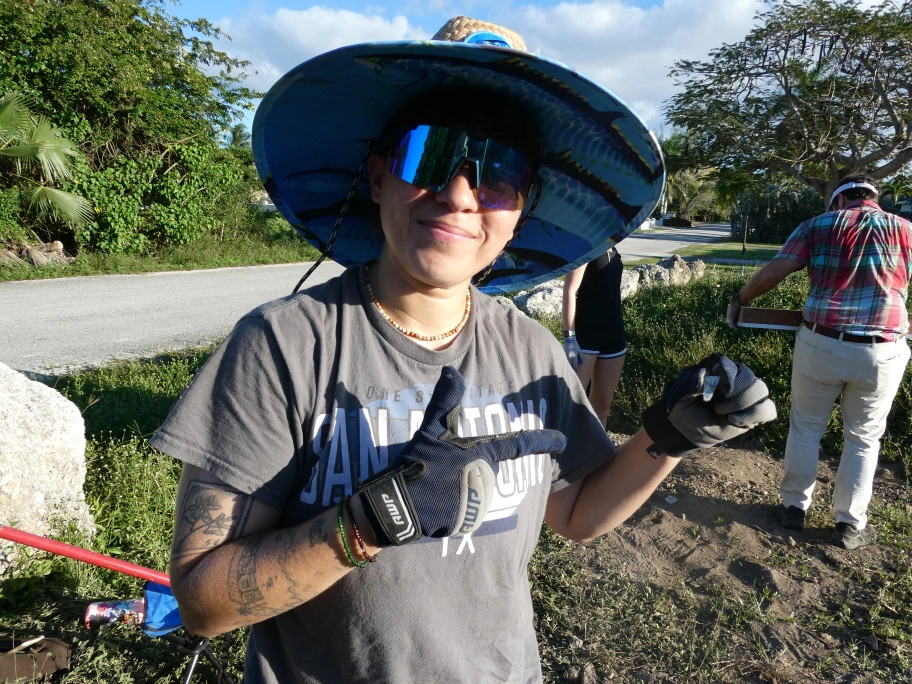
Working morning and evening shifts over the course of four days, museum volunteer archaeologist, Charlotte Gray, worked to methodically sift through a portion of the topsoil. Since both organisations do not have the capacity to conduct a full-scale excavation, volunteers from the public joined in on several evenings to support the labour-intensive project.
The developers of OneGT generously allowed for any material collected from the site to be donated to the National Museum, and once it has all been processed, relevant artefacts will be selected and accessioned into the collection where they can be further studied. Though lacking context, the material may shed light on many aspects of life in George Town over a century ago, and help improve our understanding of Cayman’s past.
This project would not have been possible without the support of the wonderful volunteers who donated their time and effort, as well as the developers of OneGT who allowed access to the sites. Special credit goes to the Museum’s volunteer archaeologist Charlotte Gray, who contributed significant time and professional expertise to this project.
While work continues on the top soil that was removed from the Llewellyn House, we would like to take the opportunity to remind the public that when they come across remnants of history, or identify areas they think may hold archaeological potential, the best course of action is always to leave it undisturbed and contact the National Museum or National Trust.
This project demonstrates how methodical and in-depth investigation can take place (preserving as much of the materials integrity as possible), when the public reach out regarding archaeological finds.