



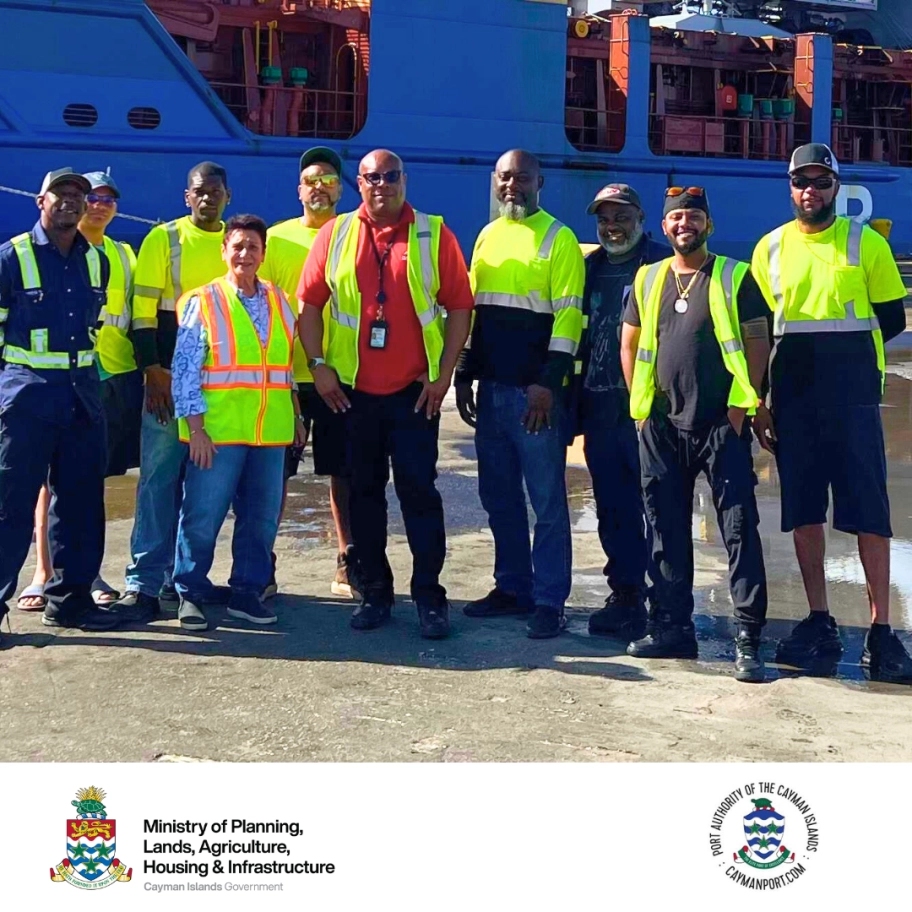
The Ministry of Planning, Lands, Agriculture, Housing & Infrastructure (MPLAHI), together with the Port Authority of the Cayman Islands (PACI), announces the arrival of a new purpose-built maritime cargo crane — a significant advancement in the ongoing modernisation of the Cayman Islands’ cargo operations. Delivered on Saturday, 29 November 2025, the crane represents a strategic national investment designed to enhance safety, accelerate cargo movement, and strengthen the Islands’ supply chain.
This multi-million-dollar investment was manufactured by Konecranes, a global leader in lifting equipment with more than a century of engineering expertise. Konecranes is recognised worldwide for its commitment to safety, innovation, and sustainability — developing energy-efficient, environmentally responsible equipment engineered for long-term reliability.
The Port Authority has purchased a Konecranes Gottwald harbour crane, shipped to the Cayman Islands from the Port of Antwerp in Belgium. The company supports major ports across the globe with advanced technology and lifecycle maintenance solutions tailored to maritime cargo environments.
Hon. Johany “Jay” Ebanks, JP, MP, Minister for Planning, Lands, Agriculture, Housing & Infrastructure, welcomed the crane’s arrival, stating:
“The arrival of this new crane marks another major step in strengthening Cayman’s supply chain. It will make cargo operations faster, safer, and more reliable — supporting businesses, protecting our workers, and ensuring that essential goods reach our people without delay. This is investment with purpose, and it reflects our commitment to building a Port Authority that is efficient, modern, and ready for Cayman’s future.”
The new crane forms part of PACI’s broader cargo modernisation and efficiency strategy, which includes upgrading equipment, improving logistics, enhancing worker safety, and strengthening long-term supply-chain resilience. These efforts align with the Ministry’s infrastructure priorities outlined during the 2025–2026 Budget and Finance Committee proceedings, emphasising national preparedness and economic continuity.
By transitioning from modified construction equipment to a purpose-built maritime crane, PACI is improving operational efficiency, peak-season readiness, and long-term reliability for container and general cargo handling.
PACI Chairman, Mr. Cline Glidden, JP, commended the team’s work and the multi-year effort behind the procurement and delivery:
“This marks a major milestone for the Port Authority and the Cayman Islands. The acquisition of this crane demonstrates our ongoing commitment to efficiency, safety, and long-term resilience. We are grateful to the Minister and the Ministry for their continued support and partnership in modernising our port operations.”
He added:
“This new crane will not only enhance productivity but also improve safety for our staff and the reliability of our cargo operations. It ensures that the Port Authority continues to meet the growing demands of our economy and remains a trusted link in the country’s supply chain.”
Mr. Glidden also acknowledged the leadership of Port Director Mr. Paul Hurlston, Deputy Port Director (Finance) Mr. Donovan Hutchinson, and Deputy Port Director (Operations) Mr. Brevan Elliott, along with PACI staff who travelled to Germany for factory training with Konecranes. Their preparation ensures Caymanian operators and technicians are fully equipped to operate and maintain the new crane to international standards from day one.
The new crane will:
• Improve cargo discharge speed and reduce turnaround times
• Enhance operational safety for port personnel
• Reduce downtime and mechanical limitations
• Strengthen Cayman’s resilience during storms and peak-season demand
• Support more efficient import flows for the business community
• Increase long-term competitiveness of the national port system
PACI extends its appreciation to the public, importers, shipping partners, and the wider business community for their continued support of improvements that safeguard the Islands’ supply chain and economic stability.