



The National Conservation Council (NCC) and Department of Environment (DoE) are aware of a petition and discussions across social media regarding the use of high-power air rifles in the humane euthanasia of feral cats in Little Cayman.
We understand invasive species control can be an emotive issue and must address some of the misinformation on which this petition is based.
The DoE and NCC remain committed to the updated procedures approved by the National Conservation Council in September which support the ethical, humane and evidence-based management of invasive species across the Cayman Islands.
Though the Department and Council fully support initiatives by agencies and NGOs to improve pet ownership in the Cayman Islands, unowned domestic animals living in the wild have devastating impacts on the natural environment and it is the preservation of native species and habitats and the removal of alien invasive species like green iguanas, lionfish and feral cats, that remains their remit. There is well documented local and international evidence of the severe impacts these species have on the potential for native species to thrive in their own habitats and indeed, extensive local programs for the control of both green iguanas and lionfish have been well established and successful in reducing those impacts.
To address the continuing threats feral cats pose to native wildlife in ecologically sensitive areas, particularly in our Sister Islands, the DoE has been working with internationally recognised feral cat eradication experts from Australia since 2022. As a direct result, the Sister Islands Rock Iguana in Little Cayman and the Brown Booby in Cayman Brac have both experienced dramatic success in population recovery along with noticeable increases in several other native birds, reptiles and insects in those areas. To fully support this work, the DoE, in collaboration with the Little Cayman community and project partners, the National Trust for the Cayman Islands, has achieved 100% pet cat registration, with all pets desexed and microchipped ensuring any pets trapped could be returned to their owners.
To further improve humane outcomes, the eradication consultants recommended the Department of Environment adopt the higher ethically rated procedures practiced in Australia which minimise stress by eliminating transportation and handling for animals confirmed for euthanisation and align with international best practice for wildlife management.
Cats trapped at night are scanned in the morning and any pet cats caught are returned to their owners. Under the revised procedures, select DoE officers who have undergone specialised training and certification in precision rifle euthanasia, use high-power air rifles (FX Dreamline models from Sweden) to deliver instantaneous, painless dispatch to trapped, unowned, feral animals. This approach allows euthanasia of the trapped cat to occur swiftly on site and with lower stress to the animal—eliminating the need for transport and handling which unnecessarily causes prolonged distress.
These methods align with international evidence-based best practices for wildlife management and have been endorsed by experienced partners from Australia, as well as both the scientific teams and the ethical standards committee of the Royal Society for the Protection of Birds (RSPB). The procedures model the best practices of other jurisdictions where feral cat control and eradication have been essential to species recovery.
The use of precision gunshot euthanasia for the control of trapped wild and feral animals is also regarded as humane by groups such as the American Veterinary Medical Association (Guidelines for the Euthanasia of Animals: 2020 Edition and the American Association of Zoo Veterinarians’ guidelines for the euthanasia of nondomestic animals). The process is only carried out by licensed, trained personnel and under NCC approval.
Trap Neuter Release (TNR)
Scientific studies have shown that trap-neuter-release fails to provide lasting solutions to feral cat populations and does not address the root issue: the uncontrolled predation by feral cats on endangered and native wildlife. (University of Florida IFAS Extension (UW468 Report) and an Analysis of the impact of trap-neuter-return programs on populations of feral cats published in the journal of the American Veterinary Medical Association.)
It is only the physical removal of the feral cats from the wild which can provide effective solution to the predation problem they pose. Feral cat eradication has been carried out successfully many times around the world providing a necessary component of an effective long-term solution to protecting native wild animals from predation by introduced feral cats.
Environmentally Sensitive Areas
Certain areas of ecological concern have been prioritised by the Department of Environment for enhanced feral cat control measures, particularly, Little Cayman, and Brown Booby rookeries on Cayman Brac.
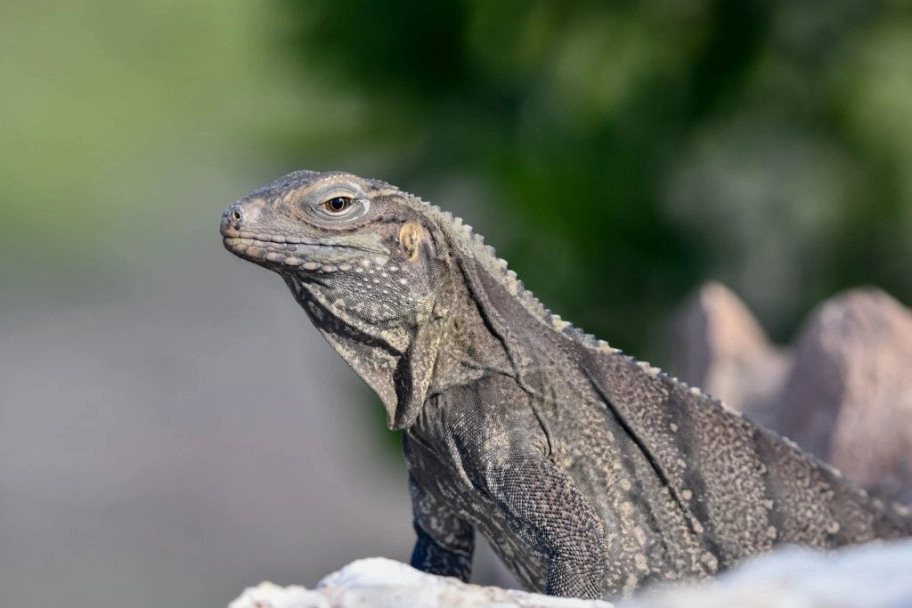
Little Cayman is home to several vulnerable, endangered, and iconic species, including the Red-footed Booby and the critically endangered Sister Islands rock iguana which is endemic to the Sister Islands and exists nowhere else in the world. Feral cats pose a well-documented threat to these native populations. Because of this, particularly reductions in hatchling iguanas, extensive feral cat removal has been conducted in Little Cayman. Since the work there began in 2022, the Sister Islands Rock Iguana population has tripled from around 1000 individuals to around 3500 in 2025.
Similarly, on Cayman Brac, Brown Booby fledgling success and overall nesting numbers were dangerously low with less than 50 nesting pairs recorded in 2019. Predictors indicated the nesting population, which only occurs on Cayman Brac, could be lost from the Cayman Islands within 10 years. Since cat control work began in 2022, nesting and fledgling success showed a dramatic increase from 12.5% in 2019 to 100% fledgling success in the 2024/25 season.
The technically sound and humane feral cat removal measures in Little Cayman and in Brown Booby nesting areas on eastern tip of Cayman Brac have resulted in quantitative signs of recovery in the Brown Boobies, and in the Sister Islands Rock Iguanas on Little Cayman, in addition to the many other native birds, snakes, lizards and insects which are also relieved of feral cat predation pressures.
By applying procedures that effectively remove feral cats from environmentally sensitive areas while always striving to reduce stress, avoid prolonged captivity, and ensure rapid and humane euthanasia for the feral animals, the Ministry and its agencies are maintaining a responsible, successful, science-based approach to the conservation of our native wildlife.
Further information
Additional resources are available at the following links:
NCC website: https://conservation.ky/
DoE: https://doe.ky/
DoE Feral Cats Q&A: https://doe.ky/wp-content/uploads/2021/09/Feral-Cat-FAQ.pdf
Supporting local scientific reports: https://conservation.ky/invasive-evidence/
We encourage concerned members of the community to review the public resources and watch the recording of the National Conservation Council at the General Meeting on 17 September, 2025 where Terrestrial Resources Manager, Frederic Burton provides a detailed explanation of the background and euthanasia procedures.