


The Cayman Islands Department of Environment (DoE) Shark Research Team has confirmed a major scientific milestone for local shark conservation – the first Birth-Alert-Tag (BAT) deployment in a pregnant 2-metre Caribbean reef shark (Carcharhinus perezi) on Friday, 5 June.
Since the start of fieldwork in April this year, the Shark Research team in collaboration with the project partner, Oregon State University’s (OSU) Coastal Oregon Marine Experimental Station (COMES), has captured and examined a number of male and female Caribbean reef sharks with the aim to collect scientific data from mature males and pregnant females.
On June 5th , the DoE Shark Research Team together with COMES safely secured a large female Caribbean reef shark and collected biological data, including body length and girth measurements, a DNA sample, and a blood sample. “Plasma from the blood sample will be used for sex hormone extraction and analysis”, explains Kirsty Ballard, PhD candidate at COMES, “to better understand reproductive timing and physiology in this species”.
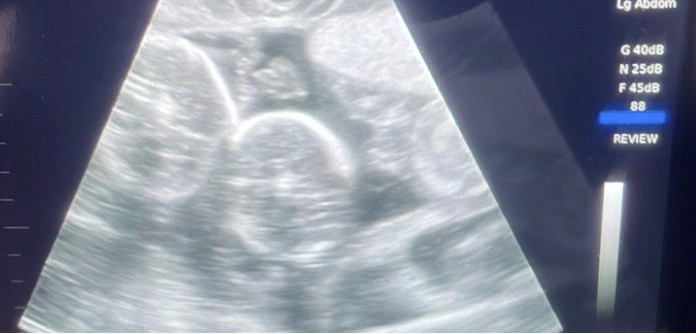
Using a portable veterinary ultrasound, the team identified three large pups inside the uterus, clear evidence that the female was likely near full term at the time of capture. “This marks the first time we have confirmed a pregnancy using the ultrasound”, said Anne Veeder, Research Officer for the DoE Shark Research & Conservation Progamme. “It was exciting to count three pups, each very large. The size of the pups tells us that this female will give birth very soon”, explains Ms Veeder.
Following the confirmed pregnancy using the ultrasound by the DoE Shark Research Team, PhD candidate Kirsty Ballard from COMES inserted the Birth-Alert-Tag (BAT) safely into the uterus where it will stay inactive among the pups until the time of birth.
“The BAT is a small, positively buoyant satellite device, especially designed for pregnant sharks. It will be expelled with the pups when the female gives birth and float to the surface. Once on the surface, the BAT will transmit the exact time and location of the birth via satellite.”, explains Dr James Sulikowski, Director of COMES.
The DOE and COMES team also deployed a Pop-up Satellite Archival Tag (PSAT), attached externally to the 1 st dorsal fin of the female shark. “This tag will record depth, temperature and horizontal movement data” explains Agathe Moreau, Research Assistant for the DoE Shark Research & Conservation Programme. “The PSAT will collect and store the data for one year before detaching (“popping off”) from the shark, floating to the surface and then transmitting the archived data via satellites.” This way DoE researchers are able to track the mother’s movements and habitat use during gestation and after giving birth.
Together, these technologies will provide an unprecedented window into the life events of the most vulnerable life stages of Caribbean reef sharks, including where females give birth and how breeding individuals use Cayman’s coastal habitats during gestation.
“The confirmation of pregnancy with the ultrasound and the deployment of the first BAT in a Caribbean reef shark is an incredible moment for DoE Shark Research in the Cayman Islands,” said Dr Johanna Kohler, Manager of the DoE Shark Research & Conservation Programme. “It is a major step forward in understanding the reproductive ecology in local sharks because the technology that we use helps us to identify pregnancy stages, litter sizes and pupping areas, and ultimately lead to evidence-based management decisions to better protect our coastal sharks.”
“From the limited evidence collected over the previous years, we believe Cayman’s six coastal shark species* likely give birth between May and September”, said Dr Kohler. “This project will help us narrow it down for each species, but for now we urge the public to please look out for both baby sharks and also large females who might look for a safe place to give birth in the shallows along the shoreline.”
Shallow waters and mangrove forests provide the perfect shelter and food for young shark pups. In summer, baby sharks can be seen swimming around our shores more frequently. This also means anglers are more likely to encounter young sharks when fishing from shore. If you encounter a shark, please stop fishing immediately until the shark leaves the area. In the case of capture, quickly attend to the accidentally hooked shark to give them a better chance of survival. Remember to use non-stainless steel circle hooks to reduce the chances of gut hooking.
This project is funded by the UK government through Darwin Plus and the Cayman Island Brewery through sales of White Tip Lager.
Report your baby shark sighting or any other shark sightings, including injuries and deaths, via email to sharks@gov.ky.