

The Mosquito Research and Control Unit (MRCU) represented the Cayman Islands at an international symposium in Oman last week, sharing its experience and expertise in mosquito management with vector control professionals, researchers and government representatives from across the Gulf region.
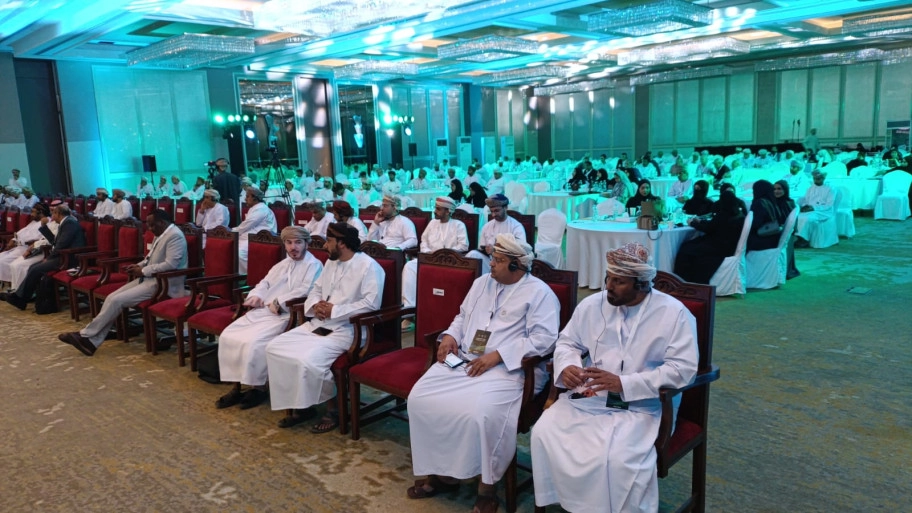
The 2nd Symposium on Mosquito Vector Control Management, held in Salalah on 25 and 26 August, brought together approximately 200 participants to explore emerging challenges, new technologies and strategies for improving mosquito and disease vector control.
Participants included government representatives, researchers and vector control professionals from countries including Saudi Arabia, Qatar and Yemen. The symposium provided an important platform for researchers and technical specialists responsible for mosquito control programmes across the region to exchange knowledge, operational experiences and approaches to managing mosquito populations and mosquito-borne disease risks.
Representatives from the World Health Organization (WHO) also delivered presentations on the global situation involving dengue, Zika and chikungunya, highlighting current public health challenges and opportunities for prevention and control.
MRCU was represented by Senior Research Officer Carlos Pecanha, who presented on the challenges of urban vector control, as well as the modes of action and key considerations associated with new technologies for mosquito control.
“Engaging with professionals and researchers from such diverse environments demonstrates that many of the challenges we face are shared globally,” Mr. Pecanha said. “The Cayman Islands’ experience and strategies can provide valuable insights to help other countries strengthen their public health and vector control efforts. At the same time, opportunities like this allow us to learn from the experiences and research of others and consider how those lessons may benefit our own work in Cayman.”
MRCU and the University of Glasgow were the only international organisations invited to participate and present at the symposium. Mr. Pecanha’s presentation was among the most discussed sessions of the event and helped establish opportunities for future academic and technical collaboration.
The symposium comes at a time when dengue and other mosquito-borne diseases continue to present a significant global public health challenge.
WHO global dengue surveillance data show that more than 7.37 million dengue cases have been reported worldwide in 2026, including approximately 2.83 million confirmed cases, more than 35,000 severe cases and 5,166 deaths. WHO notes that surveillance sensitivity varies considerably between countries and regions and that reported data should therefore be interpreted accordingly.
The increasing global burden of mosquito-borne disease reinforces the importance of maintaining strong surveillance, effective mosquito control and access to current research and technologies in the Cayman Islands. Although Cayman has not experienced the levels of local transmission seen in many affected countries, continued vigilance is important given the Islands’ international connectivity and the presence of mosquito species capable of transmitting diseases such as dengue, Zika and chikungunya.
MRCU’s participation in the Oman symposium reflects its continued commitment to remaining connected with international research, emerging technologies and evolving best practices, while sharing more than five decades of Cayman Islands experience in mosquito surveillance and control.
This work also supports the Cayman Islands Government’s 2026–2028 Broad Outcome of “Healthy and Empowered People with Improved Quality of Life for All Ages” by strengthening the knowledge, partnerships and technical capacity needed to protect public health and support community wellbeing.