

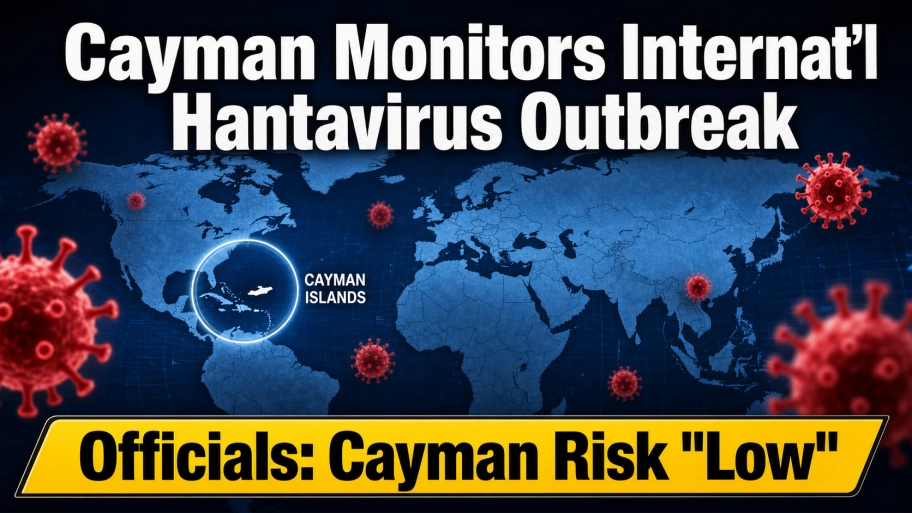
The Ministry of Health, Environment and Sustainability and the Public Health Department say the overall public health risk to the Cayman Islands remains low following an international hantavirus outbreak linked to a cruise ship in South America. The Dutch vessel MV Hondius departed Argentina on 1 April with 149 passengers and crew representing 23 nationalities and has since been associated with reported cases of hantavirus infection.
Health authorities in other countries are tracing and monitoring people who disembarked earlier in the voyage. To date, there are no confirmed cases in the Cayman Islands connected to this incident.
Chief Medical Officer Dr. Hilary Wolf says at this time, "we have not been alerted to any passengers from the vessel, or individuals identified as close contacts of known cases, being residents of the Cayman Islands We continue to monitor information provided through the World Health Organization and international health partners while maintaining heightened vessel surveillance and established public health monitoring protocols.”
Hantaviruses are a group of viruses carried mainly by rodents and are most often spread through contact with infected rodent urine, droppings or saliva, or by exposure to contaminated environments. Public health officials note that the working hypothesis in the current investigation is that exposure to Andes virus, a hantavirus strain endemic in parts of South America, may have taken place before passengers boarded the Hondius in Argentina.
Medical Officer of Health Dr. Williams explained that some strains such as Andes virus have been linked to limited person‑to‑person transmission, but only in situations involving prolonged close contact. This pattern differs from the routine spread seen with more common respiratory infections.
Locally, the Ministry has implemented enhanced surveillance and prevention measures. Rodent control activities have been increased at shipping ports of entry, and the use of rat guards continues to be mandatory for all vessels docking alongside ports and shore facilities.
Under established maritime health protocols, all cruise vessels calling on the Cayman Islands must submit a Maritime Declaration of Health 48 hours before arrival. These declarations are reviewed by port surveillance and border control teams, with additional follow‑up and on‑board inspections as needed, including checks of medical logs and illness reports. Public health and port health officials are also maintaining heightened monitoring of illness notifications and requests for medical disembarkation.
Cayman’s response is supported by regional surveillance information coordinated by the Caribbean Public Health Agency. This includes alerts from the Tourism and Health Information System and the Caribbean Vessel Surveillance System, which help countries track and share information about public health threats linked to maritime travel and tourism.
The Ministry is advising anyone travelling to countries where hantavirus is known to occur to avoid rodents, rodent droppings and potentially contaminated environments, particularly in rural areas. International health authorities have not recommended changes to routine travel or cruise operations as a result of this outbreak, but MHES says it will continue to monitor the situation and advise the public if guidance changes.