



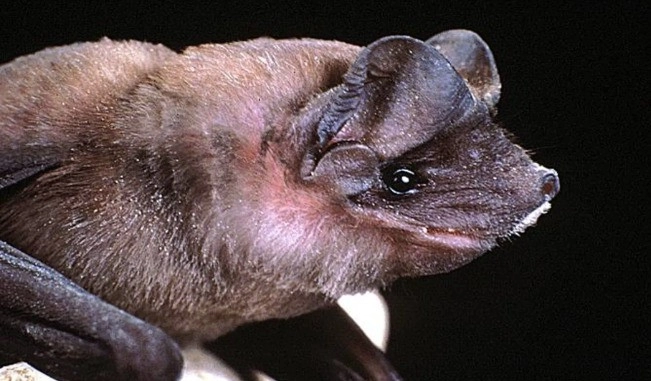
Since 2021, summer has marked a time of year when the Department of Environment and the public turn their gaze to the evening sky, where one of Cayman’s most underappreciated animals rules supreme: the velvety free-tailed bat (Molossus milleri). Both DoE and citizen scientists from all walks of life venture out at dusk to bat houses across Grand Cayman to witness the emergence of these remarkable creatures as they take to the skies to hunt for insects. In the last 5 years, Bat Count Cayman has conducted 558 surveys, by 13 DOE staff members, 10 interns and 43 citizen scientists across 57 bat houses in Grand Cayman. Now in its sixth year, the project aims to recruit more volunteers to count more bat houses than ever before.
Citizen science is the practice of enlisting volunteers to help collect data for scientific analyses and is particularly important when covering large areas and/or over long periods of time. Bat Count Cayman’s citizen scientists have been integral to the project’s success for both coverage and consistency. The passion and sentiment of our volunteers towards nature is exponential, and each have their own personal reasons for taking part. Volunteers bravely face traffic, mosquitoes and weather shifts to get their surveys done, all in the name of science.
The implementation of citizen science has been a tremendous asset to the project. It instils such profound joy and hope in our Terrestrial Resource Unit to see local people taking the initiative to get involved in conservation. The passion and sentiment of our volunteers towards nature is exponential, and each have their own personal reasons for taking part. Nancy Barnard, a new recruit to Bat Count Cayman, says, “I joined the bat count this year because I love the work of the DoE and wanted to do whatever possible to help our natural resources. My daughter is home for the summer and it is a perfect reason to spend an hour with her in peace and quiet, gazing at the glorious sunset and twilight skies whilst counting the bats. We’ve learnt so much through the Programme!”
We’ve learnt so much through the Programme!” Veteran bat counter, Omari Rankine, explains, “I feel that in a time when the pursuit of development and profit is rapidly changing the face of the beautiful country I call home, there should be an equal commitment to protecting the natural environment that makes it so special. Our ecosystems are an essential part of Cayman’s identity, and once they are lost, they cannot easily be replaced. Participating in the annual bat count is my small way of contributing to the conservation of our wildlife and helping ensure that future generations can enjoy the same natural beauty that we have today.”
DOE’s Terrestrial Resource Unit started Bat Count Cayman to examine the condition of and colony sizes within a network of bat houses established in 1994 as part of the National Trust’s Bat House Programme The network of bat houses provide artificial roosting alternatives and have been available for property owners to purchase since 1994.
The houses have become essential infrastructural implementations in Cayman’s ever-modernising landscape. The velvety free-tailed bat appears to be the only local bat species to utilise them, as it is the smallest and has best adapted to urban habitats as its preferred natural habitats are lost. The project has since become a platform to highlight the vastly unsung importance of bats to the Cayman Islands.
As of 2013, the National Conservation Act classifies all the native nine bat species are Part 1 protected, meaning protected at all times, same as our native rock iguanas and parrots. However, the role bats play in our ecosystem lacks integration into public knowledge. For instance, M. milleri is one of the most irreplaceable forms of natural insect control on island, particularly for moths, flies and mosquitoes. Maintaining a balanced population of these nocturnal insects would be near impossible without the bats. That is why preserving their habitat and ensuring colonies remain undisturbed are imperative, particularly during the pupping season which spans from May to November, with births being highest in May and juveniles fledging the roost between August and January.
In Grand Cayman, Bat Count Cayman runs from June to August, overlapping with the arrival of new pups. Colonies will consist mostly of females and their pups, alongside one male who has exclusive breeding access to a harem of select females. Although juveniles will leave their birth colony upon reaching independence, and dominant males will get displaced from harems by rivals, colonies are largely philopatric, remaining in the same location for life. Although the average life expectancy of this species is 1.8 years, one specimen from Panama was documented to be 13 years old, meaning some bats we have counted might have been around since Bat Count Cayman began!
The activity of M. milleri is crepuscular, meaning it’s greatest at dusk and dawn. Their foraging periods are usually limited to less than ninety minutes in the space of twenty-four hours, spending much of the day and night asleep. This makes them a relatively easy species for the public to survey, as counting does not require staying out late and can be flexibly implemented into one’s evening schedule. Large areas of open clear sky are required for hunting, and on evenings with continuous heavy rain, the bats will sometimes forgo feeding for a night. It appears, like many humans, bats like to stay inside on stormy nights.
After a basic training, counters arrive to the bat house 30 mins before sunset and count the number of bats exiting the house (using a counting app) for 30 minutes from the first emergence. Consistency is integral to having robust data so counters are asked to visit the same bat house for 3 consecutive nights. The results are then submitted to the DoE as part of the annual survey and long-term analyses.
Despite only being the length of your index finger, M. milleri can accelerate to between sixty and seventy miles per hour, speeds at which human drivers are prohibited from reaching on most roads. Emerging bats will drop from the lower shafts of the bat house, akin to skydivers disembarking a plane. Once in the air, they vanish out of view in seconds. Focus is one of the most important pieces of equipment, as it is easy to miss emerging bats. To sustain their astonishing speed, each bat must consume over half its weight in insect matter each evening. For lactating females, this caloric demand increases. As Bat Count Cayman takes place in the pupping season, there will be times during hunting when a female will return to the bat house to nurse her pup only to fly out again to catch more food within her small feeding window. This is why when volunteers observe a bat entering the bat house and one exiting shortly after, the emerging one is not counted, upon risk the same bat gets counted twice.
The total number of bats counted each year will vary depending on the survey effort with no definite trend visible yet due to the project still being relatively recent. Bat populations will naturally fluctuate with a variety of factors. Weather events, loss of roosting sites, food availability and natural mortality all pose an impact. In 2021, only twenty-one bat houses were surveyed, whereas forty-one were surveyed in 2022, explaining the 46% increase in the count total (see Fig 1). 2023 had the highest count, yet little change in survey effort (see Fig 1), which could indicate a successful pupping season from the previous year. The annual number has steadily fallen over the last two years by 19%, despite survey efforts remaining stable (See Fig 1). It could be the case a rainier summer, alongside Hurricane Beryl, in 2024 left less overall foraging time for the bats during the pupping season. A much more arid summer was seen in 2025, one of the hottest and driest on record, which could have impacted insect breeding cycles, thus reducing food availability. We can confirm four bat houses on the original site list have been removed within the five-year operational period, which has affected the annual count trendline. Investing in the creation more solidified dataset over a long period of time will increase the credibility of observed trends. Maximising our survey efforts by incorporating more bat houses and recruiting more volunteers in Bat Count Cayman will be needed to achieve this.
To show our appreciation to our volunteers, Bat Count Cayman has secured sposorship over the years in the form of prizes which are raffled off at the end of the bat count season. In 2026, the selection of prizes generously donated by our sponsers: Jean-Michel Costeau’s Ambassadors of the Environment, Foster’s, Kirk Market, Cost-U-Less and Red Sail Sports, have truly helped in garning buzz around the project. Involving local businesses is an important element to Bat Count Cayman as it highlights the Cayman-centred aspect of the project and how community engagement is necessary for long-term support.
Bat Count Cayman is a reminder to all who participate that humanity and nature are inextricably linked with each other. By conserving bats, we are preserving a keystone species responsible for maintaining essential processes in the natural environment which we are still a part of.