

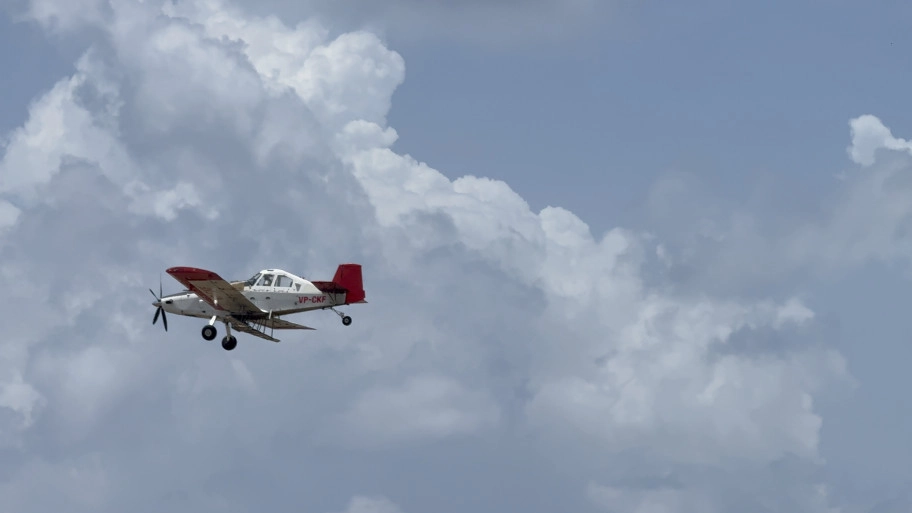
The Mosquito Research and Control Unit (MRCU) will begin island wide aerial larvicide treatments across Grand Cayman on Monday, 25 May 2026, as part of its continued efforts to keep mosquito populations as low as practical through proactive, environmentally sensitive mosquito control operations.
The daytime operations are expected to continue for up to two weeks, weather permitting.
Residents can expect to see MRCU’s aircraft flying at low altitude and making numerous passes over treatment areas throughout Grand Cayman during the operation. These flights are carefully planned and guided by operational data, field observations, mosquito trap collections, public reports, and ongoing research.
The treatments target mosquito larvae before they develop into biting adult mosquitoes. By interrupting the mosquito life cycle early, MRCU aims to significantly reduce the size and intensity of mosquito emergences across the island.
MRCU is now entering the time of year when more frequent mosquito emergences are expected due to seasonal conditions that create favourable breeding environments for mosquitoes, particularly within swamps, wetlands, and other natural habitats.
While larviciding will not completely stop all mosquito emergences, this proactive approach plays a critical role in significantly reducing the number of mosquitoes that eventually emerge. Without these treatments, mosquito emergences would be substantially larger, more uncomfortable for residents and visitors, and would take much longer to bring mosquito numbers back down to practical levels through adult mosquito control operations.
The product being used is Altosid granules, a larvicide specifically designed to target immature mosquitoes in breeding habitats. The product has been widely used in mosquito control programmes for many years and will not cause harm to humans, pets, wildlife, or the environment. MRCU follows all product label requirements and application guidelines, with safety remaining a top priority throughout all mosquito control operations.
MRCU’s mosquito control programme is rooted in science, surveillance, and environmental responsibility. The Unit’s data driven approach allows treatments to be strategically targeted to areas where they will have the greatest impact while minimising unnecessary environmental disturbance.
Unlike adult mosquito control operations, which target flying mosquitoes after they emerge, larviciding focuses on mosquitoes in their aquatic stage before they become biting adults. This proactive strategy helps reduce the overall mosquito population before it reaches nuisance levels.
MRCU is reminding the public that no special precautions are necessary during the aerial treatments. Residents may notice the aircraft operating repeatedly over certain locations as pilots carry out precise application patterns designed to ensure effective coverage of breeding areas.
The operation supports several of the Cayman Islands Government’s Broad Outcomes for 2026 to 2028, particularly those related to Health and Social Development, Housing, Infrastructure and Environment, and Efficient, Effective and People Centred Public Services. Through proactive mosquito management, MRCU continues to support public health, environmental protection, and quality of life across the Cayman Islands.
MRCU encourages the public to continue doing their part by reducing standing water around homes and properties, as even small containers can create breeding opportunities for certain mosquito species.
To learn more, visit the MRCU website and social media platforms.